
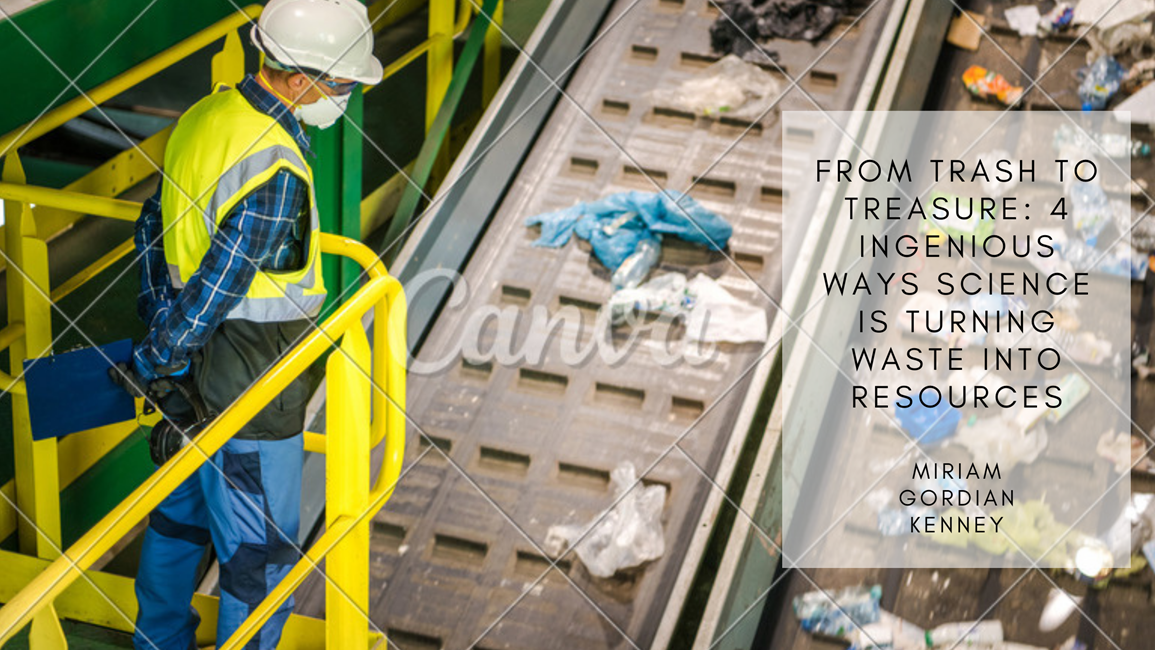
In a world of environmental challenges, science is emerging as a beacon of hope by transforming waste into valuable resources. Let’s explore four ingenious ways science is turning what was once considered trash into treasure.
1. Turning Plastic Waste into Fuel:
Plastic pollution has garnered increasing attention, and scientists are tackling this issue with innovative solutions. Pyrolysis, a process where plastic is heated without oxygen, breaks plastic waste into liquid fuel. This liquid can be used as a substitute for traditional fuels, providing a sustainable and eco-friendly alternative.
2. Harvesting Energy from Food Waste:
Have you ever thought about the energy potential stored in food waste? Anaerobic digestion is a process that converts organic waste, such as food scraps and agricultural residues, into biogas. This biogas, primarily composed of methane, can be used as a renewable energy source for cooking, heating, or generating electricity.
3. Mining Electronic Waste for Precious Metals:
Electronic waste, or e-waste, is a treasure trove of precious metals like gold, silver, and copper. Traditional mining methods are resource-intensive and environmentally damaging, but urban mining—extracting valuable metals from discarded electronics—offers a more sustainable solution. By recycling e-waste, we recover valuable materials and reduce the environmental impact of mining.
4. Upcycling Textile Waste into Fashion:
The fashion industry is notorious for its environmental footprint, but science is paving the way for sustainable alternatives. Researchers are exploring ways to upcycle textile waste into new, high-quality fabrics. By breaking down old garments and transforming them into new, fashionable items, science gives a second life to discarded clothing, reducing the demand for virgin materials.
As we witness these scientific innovations, it becomes clear that our trash can be a valuable resource with the right approach. These creative solutions address the immediate problem of waste and contribute to the larger goal of building a circular economy—one where materials are reused, repurposed, and recycled.
In our collective journey towards a more sustainable future, embracing these inventive approaches is crucial. It reminds us that by harnessing the power of science, we have the potential to turn the tide on waste and create a world where the concept of “trash” is redefined as a source of valuable, reusable resources. After all, in the hands of science, even the most overlooked items can find a new life and purpose in our quest for a greener, more sustainable planet.